
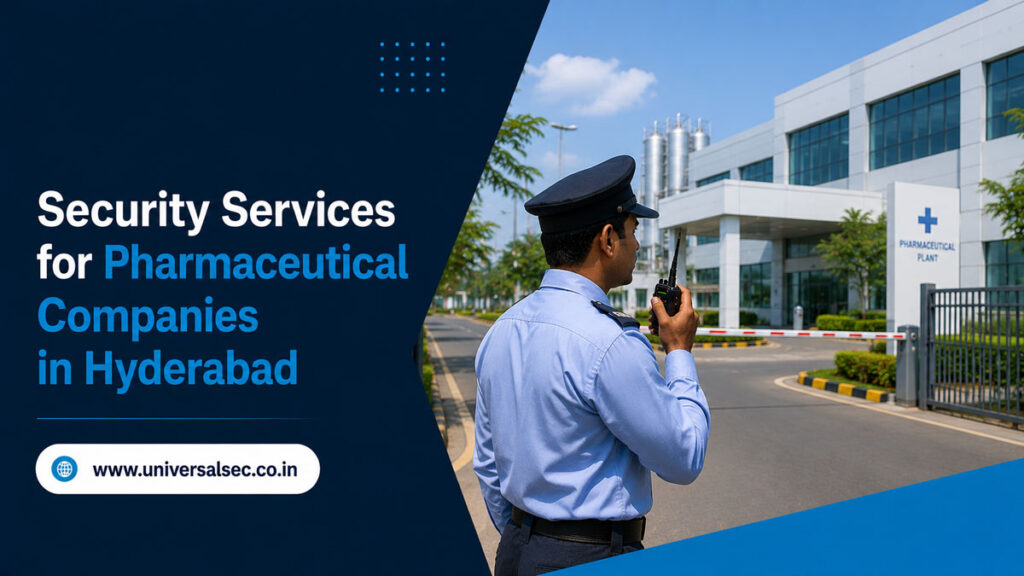
Security services for pharmaceutical companies in Hyderabad are essential for protecting employees, facilities, equipment, materials and controlled access areas. Pharmaceutical facilities often operate around the clock and may have laboratories, manufacturing areas, warehouses, loading zones and restricted sections that require different levels of security.
A strong security plan should be designed around the facility’s layout, workforce, operating hours, access points and internal procedures. This article covers the key security requirements pharmaceutical companies should consider when selecting security services in Hyderabad.
Why Pharmaceutical Companies Need Specialized Security
Pharmaceutical facilities have complex operations involving employees, contractors, vendors, visitors, vehicles and material movement. A security team must help maintain controlled access without unnecessarily interrupting production or logistics.
Security personnel may support:
- Employee access management
- Visitor and contractor control
- Vehicle entry and exit
- Material movement monitoring
- Perimeter security
- Warehouse protection
- Loading and unloading areas
- Restricted-area access
- Incident reporting
- Emergency coordination
The exact deployment should be based on a site assessment rather than simply assigning a standard number of guards.
Key Security Requirements for Pharmaceutical Facilities
1. Controlled Access to the Facility
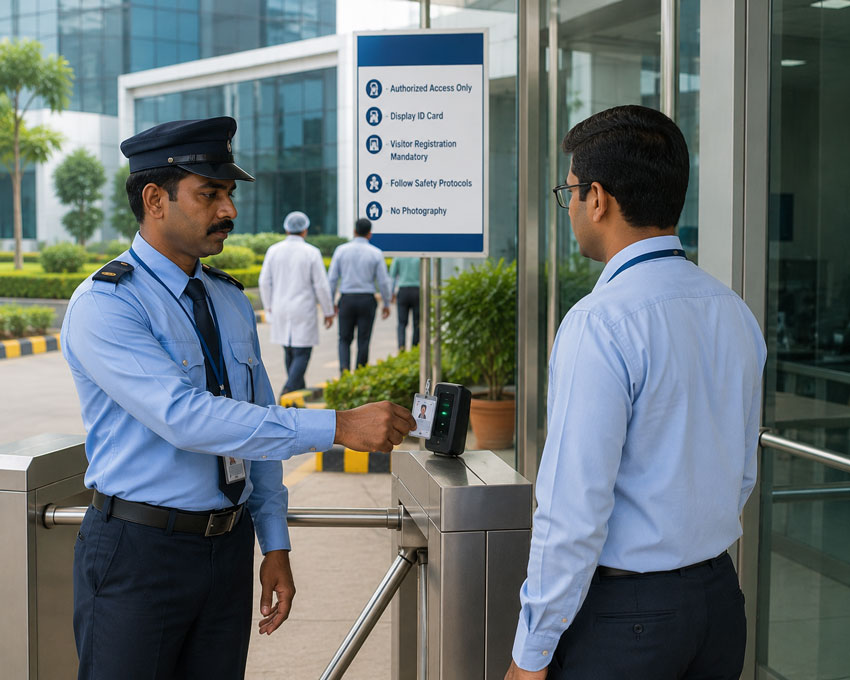
The main entrance is a critical security point, but pharmaceutical sites may have several additional gates and service entrances.Security personnel can verify employees, visitors, contractors and authorised vehicles according to the company’s procedures. Restricted areas should have clearly defined access rules.
Access control becomes particularly important when different parts of the facility have different operational or confidentiality requirements.
2. Visitor and Contractor Management
Pharmaceutical companies may receive equipment suppliers, maintenance teams, auditors, vendors, clients and other visitors.
A structured visitor process can include:
- Identity verification
- Purpose-of-visit confirmation
- Employee authorisation
- Visitor records
- Appropriate visitor identification
- Exit verification
Contractors may require additional access instructions depending on the area in which they are working.
3. Material Inward and Outward Control
Pharmaceutical facilities can have continuous movement of raw materials, packaging materials, finished products and other supplies.Security personnel should follow clearly documented procedures for checking and recording material movement. Responsibilities should be coordinated with stores, logistics and authorised facility personnel.
Security guards should not make independent decisions about material release. They should follow the company’s established documentation and escalation process.
Protecting Pharmaceutical Warehouses
Warehouses may contain raw materials, packaging supplies or finished products and can require dedicated security coverage.
Important areas can include:
Storage entrances
Dispatch areas
Loading bays
Vehicle parking
Material gates
Restricted storage sections
Security personnel can help control access and monitor movement while warehouse teams remain responsible for inventory and operational processes.
1. Perimeter and Gate Security
Many pharmaceutical facilities operate across large premises with boundary walls, multiple buildings, parking areas and service roads.
Regular security patrols can help identify:
- Unauthorised access attempts
- Unsecured doors or gates
- Damaged boundary sections
- Unusual activity
- Lighting or visibility concerns
Patrol frequency should be determined according to the site’s layout and identified risks.
2. CCTV and Security Personnel
CCTV can provide useful visibility across entrances, production surroundings, warehouses, parking areas and other important locations.
However, surveillance technology works best as part of a broader security system. Security personnel can respond to situations that require physical verification, access control or coordination with facility management.
Where CCTV is used, companies should establish clear procedures for monitoring, incident reporting and handling footage according to their internal policies.
3. Employee and Shift Management
Pharmaceutical facilities may operate across multiple shifts. Security teams therefore need clear procedures for employee entry and exit during shift changes.
Peak movement periods may require additional attention at:
- Employee gates
- Parking areas
- Staff entrances
- Transport pickup and drop-off points
- Common access areas
Effective coordination can help maintain security while avoiding unnecessary congestion.
4. Emergency and Incident Response
Security personnel are often among the first people to notice an unusual situation on a site.
Companies should establish clear escalation procedures for incidents such as unauthorised access, suspicious activity, property damage, security breaches or other emergencies.
Guards should know:
- Whom to contact
- How to escalate an incident
- Which areas require controlled access
- What site-specific emergency procedures apply
- How to document significant incidents
Security personnel should support the company’s emergency procedures rather than operate independently.
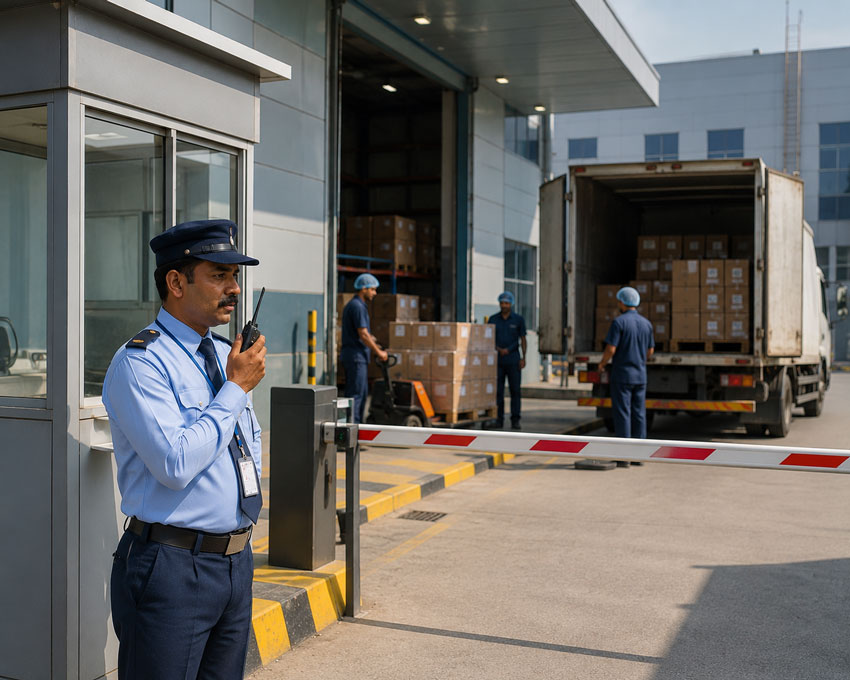
Keep Security Tight Without Disrupting Production
Your security team should protect the facility while keeping people and operations moving.
If your pharmaceutical facility in Hyderabad needs a security arrangement tailored to its gates, workforce, warehouses and operational requirements, Universal Personnel Security Training & Allied Services can help you plan the right approach.
Call Us: +91-231-2667429
Mail Us: hr@universalsec.co.in
Need Security Services In Hyderabad Explore Our Services Now.
How to Choose a Security Agency in Hyderabad
Pharmaceutical companies should evaluate a security provider based on its ability to manage a controlled and process-driven environment.
Consider these factors:
Regulatory Compliance : Check the agency’s applicable licences and statutory documentation before entering into a service agreement.
Guard Verification and Training : Ask how personnel are recruited, verified and trained. Guards should receive clear instructions about their responsibilities at the pharmaceutical facility.
Supervision : Regular supervision helps maintain attendance, discipline, post coverage and adherence to site procedures.
Replacement Support : Ask how the agency handles absenteeism and emergency replacement requirements so that critical security posts are not left uncovered.
Site-Specific Deployment : The number and placement of guards should reflect the facility’s actual requirements, including entrances, perimeter, warehouses, parking and operating shifts.
Common Security Mistakes Pharmaceutical Companies Should Avoid
Some security gaps result from unclear processes rather than a lack of manpower.
Common mistakes include:
- Allowing uncontrolled contractor access
- Ignoring secondary gates
- Poor material-entry procedures
- Failing to monitor loading areas
- Giving guards unclear responsibilities
- Relying entirely on CCTV
- Inadequate shift handovers
- Not reviewing incident reports
- Selecting an agency only on price
A security plan should be reviewed periodically as the facility, workforce and operations change.
Frequently Asked Questions
Q1. What security services do pharmaceutical companies need?
Depending on the facility, pharmaceutical companies may require access control, visitor management, gate security, warehouse security, vehicle management, patrols, CCTV monitoring support and incident reporting.
Q2. How many security guards does a pharmaceutical company need?
There is no standard number. Deployment depends on the facility’s size, number of gates, operating shifts, perimeter, employee strength, warehouses and security requirements.
Q3.Is 24-hour security necessary for pharmaceutical facilities?
Facilities operating continuously may require round-the-clock security coverage. The appropriate deployment depends on operating hours, site risks and business requirements.
Q4. How can pharmaceutical companies control contractor access?
Companies can establish defined entry procedures that include identity verification, authorisation, visitor records and access restrictions appropriate to the contractor’s work area.
Q5. Should pharmaceutical warehouses have separate security arrangements?
Large warehouses may require dedicated posts or additional coverage depending on their location, operating hours, access points, inventory and loading activity.
Q6. Is CCTV sufficient for pharmaceutical facility security?
CCTV improves visibility but does not replace physical access control, trained personnel, supervision and established security procedures.
Q7. What should companies check before hiring a security agency?
Review applicable licensing and compliance, guard verification, training, supervision, replacement support and experience with similar corporate, industrial or pharmaceutical environments.
Conclusion
Pharmaceutical facility security requires a coordinated approach to people, premises, materials and operations. Access control, visitor management, perimeter protection, warehouse security, surveillance and trained personnel should work together under clearly defined procedures.
By assessing the facility before deployment and reviewing security arrangements regularly, pharmaceutical companies can create a more controlled and organised environment while supporting their day-to-day operations.